Assembly Line for Houses: Why the Precast Circulating Production Line is Dominating Global Prefab Markets
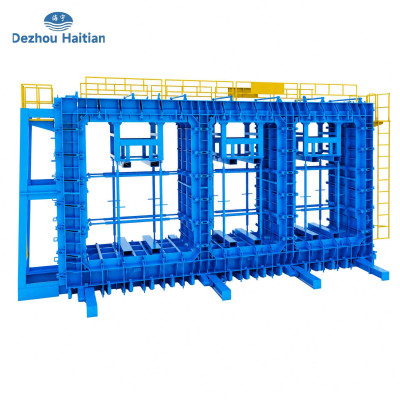
In the fast-paced world of modular construction, the Precast Circulating Production Line has become the gold standard for high-volume manufacturing. Unlike traditional fixed-bed methods that take up massive space and labor, a Precast Circulating Production Line operates like a modern automotive assembly line, moving pallets through specialized stations for cleaning, rebar placement, and pouring. By integrating a high-efficiency Precast Circulating Production Line, factory owners can finally achieve the "scale" needed to meet the skyrocketing global demand for affordable housing and commercial infrastructure.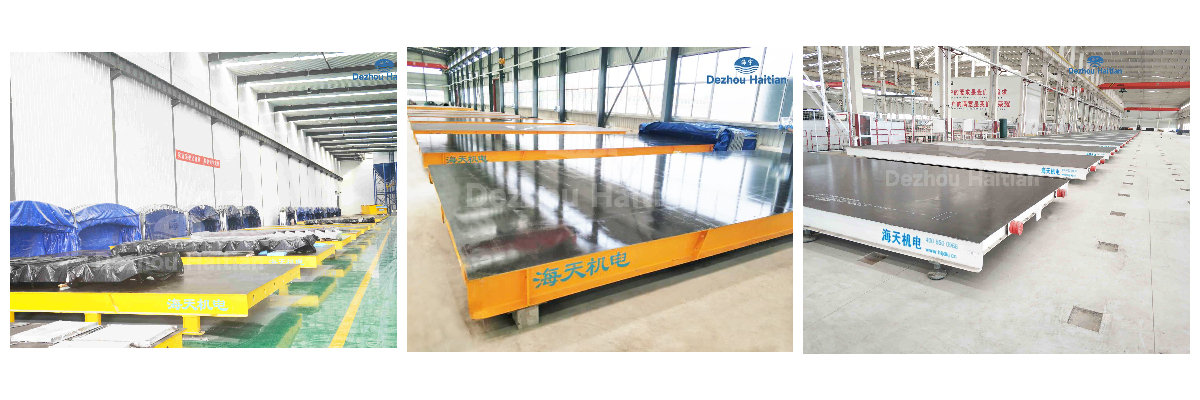
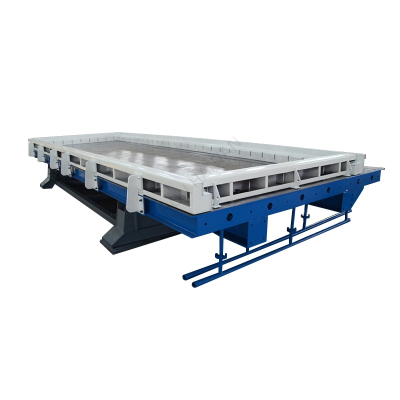
The Shift from "Craft" to "Industry" For decades, precast concrete was treated more like a craft, with workers moving from one stationary mold to another. This is inefficient. Our latest circulating system flips the script by moving the product to the workers and the machinery. The red pallets you see in our workshop are the heartbeat of this system. Each one is a precision-engineered steel platform that circulates through a closed-loop process. This automation ensures that every wall panel or floor slab is identical in quality, thickness, and finish—something nearly impossible to maintain with manual, scattered production.
Technical Excellence: The Carousel Logic The logic behind the Precast Circulating Production Line is simple but powerful: consistency. At the vibration station, the entire pallet is subjected to high-frequency compaction, ensuring the concrete reaches maximum density without air pockets. After pouring, the pallets move into a temperature-controlled curing chamber. This "curing oven" allows for a predictable 6-to-8-hour cycle, meaning you can run three shifts a day, 24/7, regardless of the weather outside. For a precast business, this predictability is the difference between profit and loss.
ROI and Labor Reduction The biggest pain point in today’s market is the labor shortage. Skilled masons are hard to find and expensive to keep. Our automated system reduces the required headcount per shift by up to 50% compared to traditional methods. Most of the heavy lifting is handled by the pallet conveyors and tilting stations, allowing your team to focus on quality control and logistics. While the initial investment in a circulating line is higher than fixed molds, the return on investment (ROI) is significantly faster due to the massive increase in output and reduction in per-unit labor costs.
Built for the Long Haul: Dezhou Haitian Expertise At Dezhou Haitian, we don't just sell steel frames; we provide the blueprint for an industrial-scale business. Our circulating lines are designed with heavy-duty industrial rollers, high-torque motors, and advanced control software that monitors every pallet’s position in real-time. Whether you are setting up a new plant in Southeast Asia or upgrading a facility in the Middle East, our team provides full turnkey support—from factory layout design to on-site commissioning.
Conclusion If you are serious about competing in the prefabricated housing space, the question isn't whether you need automation—it’s how fast you can implement it. A Precast Circulating Production Line is the only way to move from "building" to "manufacturing."