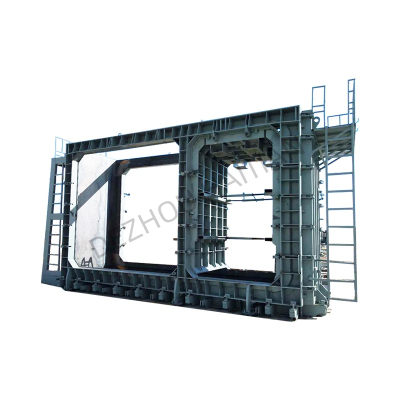
Precast Column Mold Technology Advances
Precast concrete columns, as the core component of modern building industrialization, their production quality and efficiency are directly dependent on the level of mold technology.
一、 Material Evolution: Towards Higher Performance and Sustainability
The innovation of mold materials is the cornerstone of technological progress. Although traditional steel molds are sturdy and durable, their weight and long-term maintenance costs have always been topics of discussion in the industry. Currently, the application of composite materials and special alloys is becoming the mainstream trend.
A new type of composite material mold that combines high-strength fibers and polymers has attracted much attention due to its outstanding lightweight characteristics. These molds not only ensure structural stiffness but also significantly reduce the labor intensity of operators, improve the loading and assembly efficiency. What's more, their excellent surface finish can directly provide a more refined decorative effect for prefabricated columns, reducing the subsequent processing steps.
Meanwhile, the sustainability of materials has also become a key focus of research and development. Mold materials with longer service life and full recyclability are helping manufacturers reduce resource consumption and waste generation, responding to the urgent demand for green production in the global construction industry.
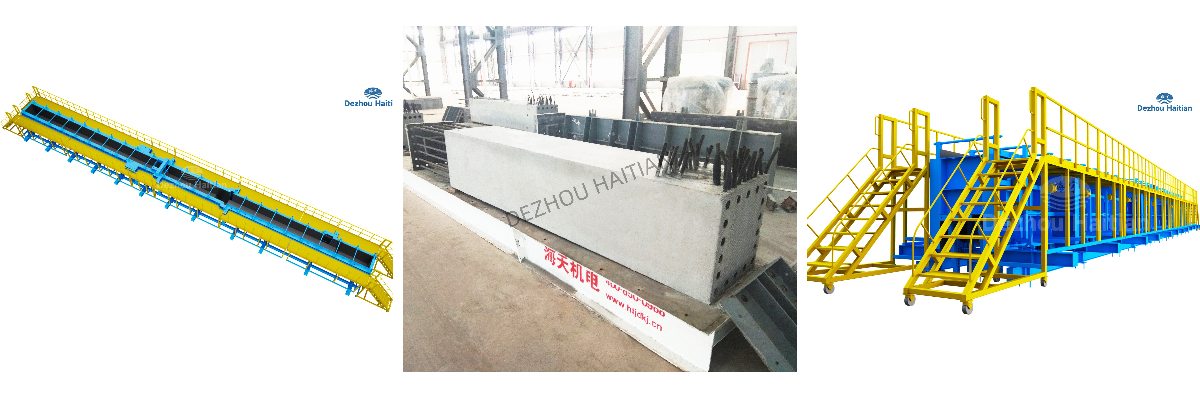
二、 Intelligent Design: Seamless Transition from Standardization to Customization
Modern architectural design strives for unique aesthetics and structural innovation, which places even higher demands on the flexibility of prefabricated column molds. Thanks to the widespread adoption of advanced design software and modeling techniques, mold design has entered the era of intelligence.
Nowadays, designers can complete the construction of complex molds and conduct stress simulations in a virtual environment, identifying and resolving potential issues that may affect demolding or component quality in advance. This "digital twin" process ensures that even for uniquely shaped irregular columns, the corresponding prefabricated column molds can achieve high-precision mold opening.
Intelligent design not only serves customized projects, but also optimizes the standard mold system in turn. Through the modular design concept, a basic prefabricated column mold system can be quickly adapted to various cross-sectional dimensions and minor shape variations through standardized interfaces, achieving an outstanding balance between efficiency and flexibility.
三、 Production Integration: The Fusion of Automation and Lean Manufacturing
At the production line level, the advancement of prefabricated column molds is reflected in their deep integration with automated equipment. In modern production lines, processes such as mold cleaning, application of release agents, insertion of steel reinforcement cages, concrete pouring and vibration are gradually being accomplished collaboratively by automated robotic arms or specialized equipment.
Among them, the automated vibration and compaction technology is particularly crucial. By precisely controlling the vibration frequency and points, it ensures that the concrete is uniformly and densely compacted within the complex prefabricated column molds, significantly reducing surface defects such as bubbles and honeycomb-like roughness, and achieving new heights in component strength and appearance consistency.
This highly integrated production model is essentially a practical application of the lean manufacturing concept. By reducing excessive reliance on manual skills, optimizing production cycles, and minimizing the idle time of molds when not in use, it has achieved a qualitative leap in the production efficiency of prefabricated columns and has also reduced the overall production costs.

Looking to the Future: Driving the Comprehensive Upgrade of the Construction Industry
To sum up, the advancement of prefabricated column mold technology is not an isolated event; it is a reflection of the deepening of the industrialization of construction. From more durable and environmentally friendly materials, to more intelligent and flexible designs, to more efficient and integrated production, these innovations collectively ensure that the quality of prefabricated concrete columns reaches perfection.
Looking to the future, with the further penetration of Internet of Things and big data technologies, "intelligent molds" with the functions of status perception and data feedback may emerge, laying the foundation for achieving predictive maintenance and self-optimization of production processes. The continuous evolution of prefabricated column mold technology is steadily driving the global construction industry towards a future of higher efficiency, better quality and stronger sustainability.