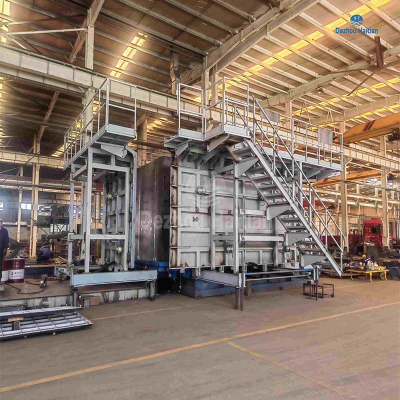
New Type Of Water Channel Mold Reduces Construction Costs
Green manufacturing drives industrial upgrading
In the current context of continuous deepening of infrastructure construction, **water channel molds** serve as the core equipment in water conservancy projects and agricultural irrigation. They are currently undergoing a critical stage of transformation from traditional manufacturing to green and intelligent. Leading enterprises in the industry are significantly increasing their research and development efforts. Through material innovation and process optimization, they are promoting a leapfrog improvement in the durability, environmental friendliness, and construction efficiency of their products. New polymer composite materials are gradually replacing traditional steel, which not only significantly extends the service life of the molds but also reduces energy consumption and carbon emissions in the production and construction processes, aligning with the national "carbon neutrality" strategic orientation. At the same time, the introduction of automated production lines and digital management systems has led to a qualitative leap in product accuracy and production efficiency, injecting strong impetus into the high-quality development of the industry. 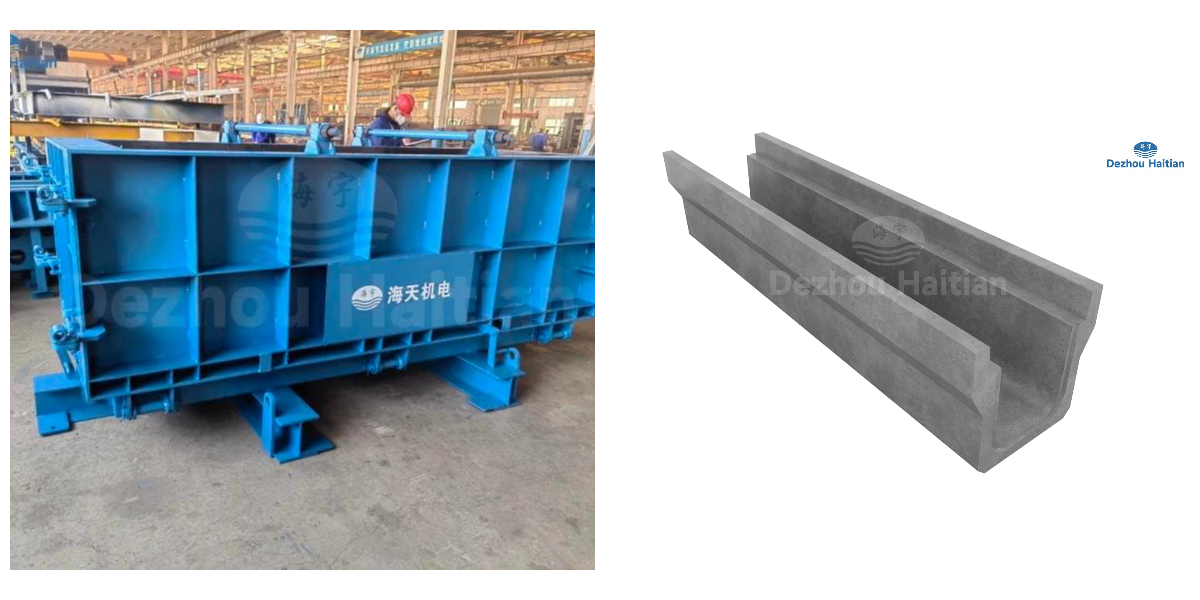
The continuous release of market demand drives the expansion of production capacity.
With the advancement of high-standard farmland construction, urban drainage system upgrades, and the deep implementation of the rural revitalization strategy, the demand for high-quality water channel molds in the market has been steadily increasing. The demand for standardized and modular products in the agricultural irrigation sector is particularly strong. The construction of modern irrigation areas requires channels to have higher seepage resistance, anti-erosion ability, and construction convenience, which directly led to the popularization of high-performance water channel molds. In the field of urban infrastructure construction, projects such as the renovation of drainage networks in old urban areas and the construction of sponge cities have placed higher demands for customized and durable drainage ditch molds. Facing the continuously expanding market space, major manufacturers have expanded their production bases and optimized their capacity layouts to respond to the differentiated demands of regional markets with faster delivery capabilities.
Technological innovation has pushed the product performance to a new level.
The technological competition within the industry is becoming increasingly fierce, and innovation has become the key path for enterprises to break through. In terms of structural design, many enterprises have optimized the force-bearing structure and demolding system of molds through finite element analysis and simulation, achieving new heights in the dimensional accuracy and surface finish of the finished products. In the field of construction techniques, the popularization of quick-installation and adjustable molds has significantly shortened the on-site operation cycle and reduced the reliance on manual labor, especially showing significant advantages in projects with complex terrain or tight schedules. Moreover, the integration of intelligent elements has also become a new highlight in industry development. Some enterprises have launched intelligent molds equipped with sensing systems, which can monitor real-time temperature and pressure changes during the pouring process and provide data support for quality control. These technological breakthroughs not only enhance the added value of products but also further consolidate the key position of water channel molds in water conservancy and municipal engineering.
The process of industry standardization is accelerating.
With the expansion of market scale and the extension of application scenarios, the industry standardization construction has made significant progress. Relevant industry associations have collaborated with research institutions and key enterprises to address key aspects such as material performance, structural safety, and construction norms of water channel molds. They have successively released and implemented a series of group standards and industry norms. The improvement of the standard system effectively curbs the phenomenon of low-quality and low-price competition, guiding the market to develop in a direction prioritizing quality and driven by technology. At the same time, local regulatory authorities have intensified the quality inspection of molds used in water conservancy projects from the source, ensuring the safety and durability of the projects. The enhancement of standardization has not only increased the trust of end users in domestic products but also created a fairer and more orderly competitive environment for outstanding enterprises, promoting the industry as a whole to move towards the track of high-quality development.